Healthy Dinner Vegetable Coconut Curry
Highlighted under: Clean Healthy Meals Collection
I love making this Healthy Dinner Vegetable Coconut Curry because it’s both delicious and nutritious. The blend of vibrant vegetables simmered in creamy coconut milk creates a dish that's as comforting as it is healthy. This recipe not only satisfies my cravings but also packs in the essential nutrients I seek in a meal. With its aromatic spices and colorful presentation, it truly makes dinner feel special while being simple enough to whip up on a busy weeknight.
Creating this Healthy Dinner Vegetable Coconut Curry was an adventure! I experimented with various vegetables and spices to find the perfect balance that would make my taste buds sing. Each time, I was amazed at how the creamy coconut milk envelops the veggies, enhancing their flavors while providing a rich, satisfying base.
One key tip I discovered is to sauté the spices first before adding the coconut milk. This step brings out their essential oils and flavors, resulting in a more aromatic and vibrant dish. Trust me, it makes all the difference!
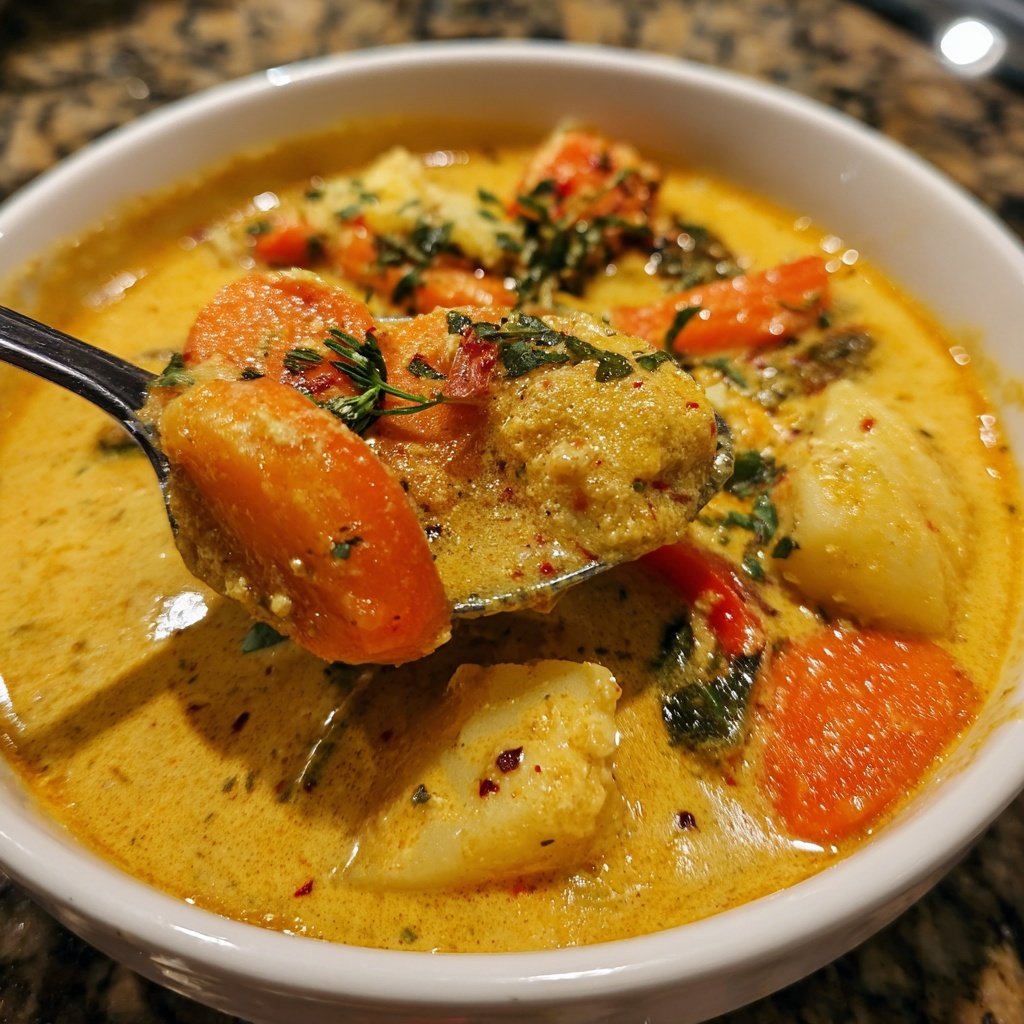
Why You Will Love This Recipe
- Creamy coconut base that hugs every vegetable
- A colorful medley of fresh produce
- Quick to prepare, perfect for weeknight dinners
The Role of Coconut Milk
Coconut milk is a star ingredient in this curry, contributing to its rich, creamy texture. It's essential for balancing the spices and enhancing the dish's overall flavor profile. When selecting coconut milk, opt for full-fat varieties for the best creaminess. If you're looking to cut down on calories, light coconut milk can be used, but be aware that it may result in a less luscious sauce. A visual cue to look for is a thick and glossy appearance when the curry simmers, indicating that the flavors are melding beautifully.
In addition to providing creaminess, coconut milk offers a subtle sweetness that pairs well with the spices. This natural sweetness can help to mellow any harshness from spices like turmeric or curry powder, allowing the flavors to harmonize. Be sure to stir the coconut milk well before adding, as it often separates in the can.
Choosing and Preparing Vegetables
Using fresh, vibrant vegetables not only boosts the dish's nutritional value but also enhances its visual appeal. You can mix and match your favorites, such as bell peppers, morning glory, or even eggplant, to create a personalized medley. Just be mindful of cooking times; denser vegetables like carrots and cauliflower require more time, while quicker-cooking options like zucchini can be added later to prevent overcooking. For a bit of crunch, consider leaving the beans a touch firmer than the other veggies, adding texture to each bite.
It's also worth noting that pre-cut or frozen vegetables can be a time-saving option without sacrificing nutrition. If you opt for frozen, just add them directly to the pot without thawing to maintain their texture. You may need to adjust the cooking time, allowing an extra few minutes for them to heat through.
Storage and Serving Suggestions
This Healthy Dinner Vegetable Coconut Curry can be stored in an airtight container in the fridge for up to three days. To reheat, warm it gently on the stove over medium heat, stirring occasionally, until heated through. You can also freeze the curry for up to a month. However, keep in mind that reheating may change the texture of some vegetables, which is why I recommend adding fresh veggies or garnish right before serving to retain a vibrant crunch.
When it comes to serving, this curry pairs beautifully with fluffy basmati rice or nutty quinoa for a protein boost. You can also serve it with naan or over steamed rice noodles for a different twist. I like to top mine with a sprinkle of toasted sesame seeds for added crunch alongside the fresh cilantro for a pop of color. Consider adding lime wedges on the side for a zesty finish that brightens the dish.
Ingredients
Gather these fresh ingredients to get started on your delicious curry:
Main Ingredients
- 1 medium onion, diced
- 2 cloves garlic, minced
- 1-inch piece of ginger, grated
- 1 red bell pepper, sliced
- 2 carrots, sliced
- 1 zucchini, diced
- 1 cup cauliflower florets
- 1 cup green beans, trimmed
- 1 can (14 oz) coconut milk
- 1 tablespoon curry powder
- 1 teaspoon turmeric
- Salt and pepper to taste
- 2 tablespoons olive oil
- Fresh cilantro for garnish
With these ingredients, you're all set to create a hearty and healthy curry!

Instructions
Follow these simple steps to make your curry:
Sauté the Aromatics
In a large pot, heat the olive oil over medium heat. Add the diced onion and sauté until translucent, about 5 minutes. Stir in the minced garlic and grated ginger, cooking for an additional minute until fragrant.
Add the Vegetables
Add the sliced red bell pepper, carrots, zucchini, cauliflower, and green beans to the pot. Stir well to combine and cook for about 7-10 minutes, until the vegetables begin to soften.
Incorporate Coconut Milk and Spices
Pour in the coconut milk, curry powder, and turmeric. Stir to combine, bringing the mixture to a gentle simmer. Season with salt and pepper to taste. Let it cook for another 10 minutes, allowing the flavors to meld.
Serve and Enjoy
Once the vegetables are tender and the sauce has thickened slightly, remove the pot from heat. Garnish with fresh cilantro and serve hot over rice or quinoa.
Enjoy your warm and comforting curry!
Pro Tips
- For added heat, consider adding a diced chili or a pinch of cayenne pepper. You can also swap in any favorite vegetables based on what you have on hand.
Tips for Enhancing Flavor
To elevate the flavor of your curry, consider marinating the vegetables in the spices for about 10-15 minutes before starting the cooking process. This allows the vegetables to absorb more flavor. Additionally, a splash of soy sauce or tamari can enhance the umami notes in the dish, making it more satisfying. I also like to experiment with adding a teaspoon of brown sugar or palm sugar to balance out the spices and add depth.
For those who appreciate heat, consider incorporating fresh chili peppers or a pinch of red pepper flakes. Adding these at the garlic and ginger stage guarantees that the heat infuses throughout the dish. Just be cautious with the amount, as you can always add more but cannot take it out once it’s in!
Vegetarian and Vegan Options
This recipe is inherently vegetarian and can easily be made vegan by ensuring that any additional ingredients, like vegetable broth or soy sauce, are plant-based. For a heartier meal, consider adding protein sources such as chickpeas or lentils towards the end of cooking. I often toss in canned chickpeas or cooked lentils to enhance the nutritional profile and keep the dish filling and satisfying.
If you are looking for a gluten-free version, make sure your curry powder does not contain any gluten-containing additives. This dish is versatile, allowing you to adjust based on dietary preferences without compromising on flavor or texture.
Scaling the Recipe
This vegetable coconut curry is easily scalable for larger gatherings or meal prep. To double the recipe, simply adjust the ingredient quantities proportionally and use a larger pot. Keep in mind that cooking times may vary slightly, so always test the vegetables for tenderness. I recommend cooking the curry over a slightly lower heat as it increases in quantity to ensure even cooking without burning the bottom.
For a smaller serving, you can easily halve the recipe, although I find it often tastes even better the next day. This makes it a great option for lunch leftovers, as the flavors continue to meld. Just ensure you store it properly to maintain its flavor and texture for future meals.
Questions About Recipes
→ Can I make this curry in advance?
Yes, this curry keeps well in the fridge for up to 3 days. Just reheat gently before serving.
→ What can I substitute for coconut milk?
You can use almond milk or vegetable broth, but the flavor and creaminess will differ.
→ Is this recipe vegan-friendly?
Absolutely! All ingredients are plant-based, making this dish suitable for vegans.
→ Can I freeze leftovers?
Yes, you can freeze the curry in an airtight container for up to 2 months. Thaw in the fridge before reheating.
Healthy Dinner Vegetable Coconut Curry
Created by: Isabella Clark
Recipe Type: Clean Healthy Meals Collection
Skill Level: Beginner
Final Quantity: 4 servings
What You'll Need
Main Ingredients
- 1 medium onion, diced
- 2 cloves garlic, minced
- 1-inch piece of ginger, grated
- 1 red bell pepper, sliced
- 2 carrots, sliced
- 1 zucchini, diced
- 1 cup cauliflower florets
- 1 cup green beans, trimmed
- 1 can (14 oz) coconut milk
- 1 tablespoon curry powder
- 1 teaspoon turmeric
- Salt and pepper to taste
- 2 tablespoons olive oil
- Fresh cilantro for garnish
How-To Steps
In a large pot, heat the olive oil over medium heat. Add the diced onion and sauté until translucent, about 5 minutes. Stir in the minced garlic and grated ginger, cooking for an additional minute until fragrant.
Add the sliced red bell pepper, carrots, zucchini, cauliflower, and green beans to the pot. Stir well to combine and cook for about 7-10 minutes, until the vegetables begin to soften.
Pour in the coconut milk, curry powder, and turmeric. Stir to combine, bringing the mixture to a gentle simmer. Season with salt and pepper to taste. Let it cook for another 10 minutes, allowing the flavors to meld.
Once the vegetables are tender and the sauce has thickened slightly, remove the pot from heat. Garnish with fresh cilantro and serve hot over rice or quinoa.
Extra Tips
- For added heat, consider adding a diced chili or a pinch of cayenne pepper. You can also swap in any favorite vegetables based on what you have on hand.
Nutritional Breakdown (Per Serving)
- Calories: 350 kcal
- Total Fat: 22g
- Saturated Fat: 16g
- Cholesterol: 0mg
- Sodium: 330mg
- Total Carbohydrates: 30g
- Dietary Fiber: 6g
- Sugars: 5g
- Protein: 5g